The fifteenth biennial "Language Resources and Evaluation Conference" (LREC) was held at the Palau de Congressos de Palma in Palma, Mallorca, Spain, on 11-16 May 2026. With over 2,400 registered participants, 944 papers (long papers, short papers, and posters), 46 workshops, and 12 tutorials, this exciting, memorable, and exhausting conference set the stage for a truly large-scale event.
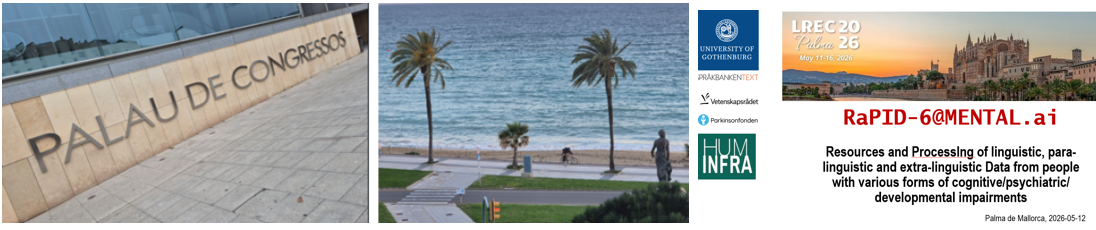
The conference location featured superb views overlooking the Mediterranean coastline.
Dimitrios Kokkinakis, serving as workshop chair, organised one of these workshops: the sixth edition of the RaPID workshop series, titled “Resources and ProcessIng of Linguistic, Para-linguistic and Extra-linguistic Data from People with Various Forms of Cognitive, Psychiatric, and Developmental Impairments.” This year’s workshop was organised in cooperation with the MENTAL.ai project in France.
The half-day event featured two keynote speakers, one invited speaker, four oral presentations, and eight poster presentations. The proceedings of RaPID-6@MENTAL.ai can be found here and will soon also be available in the ACL Anthology.
RaPID-6@MENTAL.ai at a glance
RaPID-6@MENTAL.ai brought together researchers to explore how data from people with mental and neurological conditions, such as dementia, autism, Parkinson’s disease, and depression, can be collected and analysed. The workshop focused on the use of text, speech, social media, and other multimodal data to support more effective diagnosis and monitoring of such conditions. By examining language use and various behavioural and physiological measures, researchers aim to improve early diagnosis, identify individuals at risk, and enhance patient care and treatment. New non-invasive and cost-effective methods are being developed to complement traditional clinical assessments.
Computational linguistics and Natural Language Processing (NLP) play central roles in this research area. Comparisons between data from affected individuals and healthy controls have shown promising results for early diagnosis and monitoring disease progression. Advanced computational tools and robust data infrastructures support this work and foster interdisciplinary collaboration among researchers. Despite significant progress, further research is still needed to improve prediction accuracy and develop more reliable diagnostic methods for neurological and psychiatric disorders.
Program, invited speakers and accepted papers
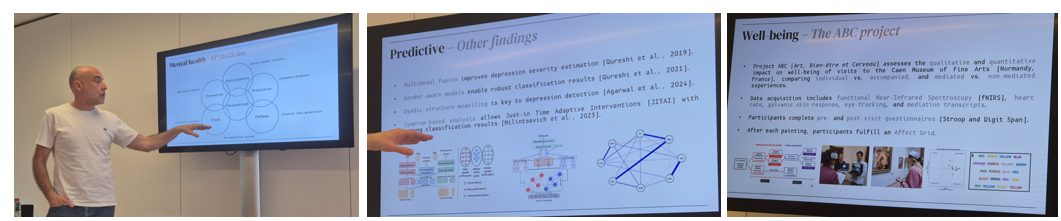
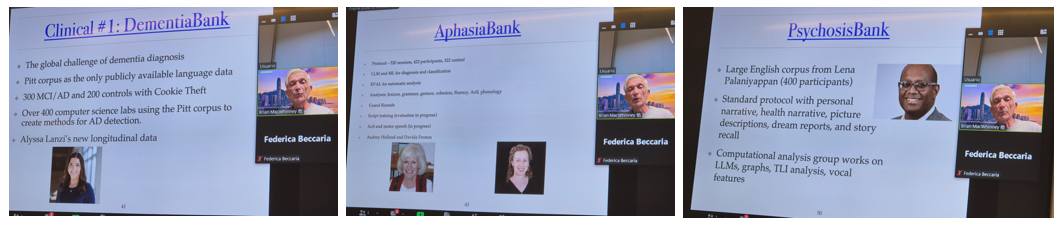 Images from prof. MacWhinney's talk.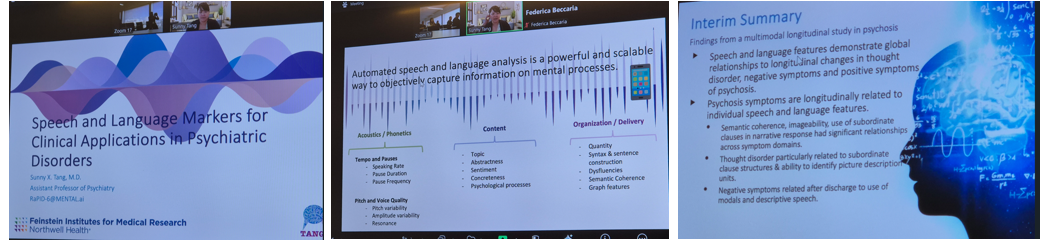
About Palma...
Palma is a beautiful city on the island of Mallorca, one of Spain’s Balearic Islands in the Mediterranean Sea, famed for its rich history, cultural heritage, and vibrant coastal atmosphere. As the capital of the Balearic Islands region, Palma boasts a stunning array of Gothic, Renaissance, and modernist architecture, as well as historic palaces and charming narrow streets, with the magnificent La Seu Cathedral standing tall as its iconic symbol. The city is renowned for its picturesque waterfront, lively old town, and Mediterranean lifestyle.
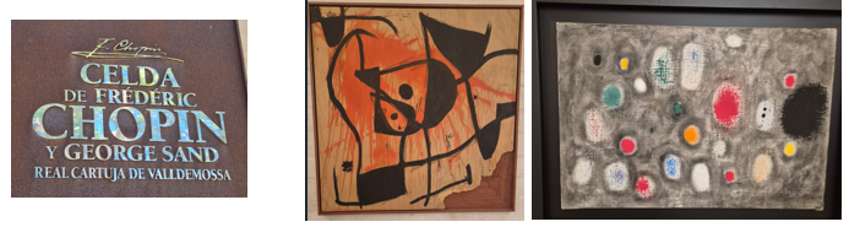
Images from the Chopin and Miro museum in Palma.
Palma’s culinary scene is equally impressive, celebrated for its tapas, fresh seafood, and traditional ensaïmada, the island’s famous spiral-shaped pastry. Moreover, Palma holds a significant place in Spain’s cultural landscape, with strong artistic connections to figures such as Joan Miró, whose studio and foundation are located in the city, and Pablo Picasso, who spent time in a nearby region of Mallorca and whose artistic legacy strongly influenced Mediterranean modern art.
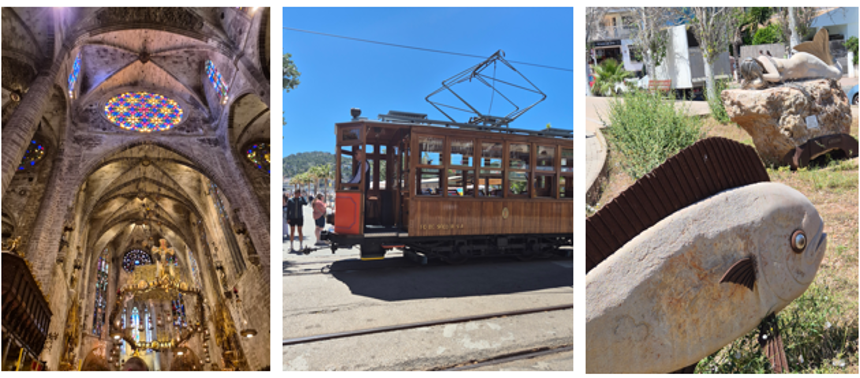
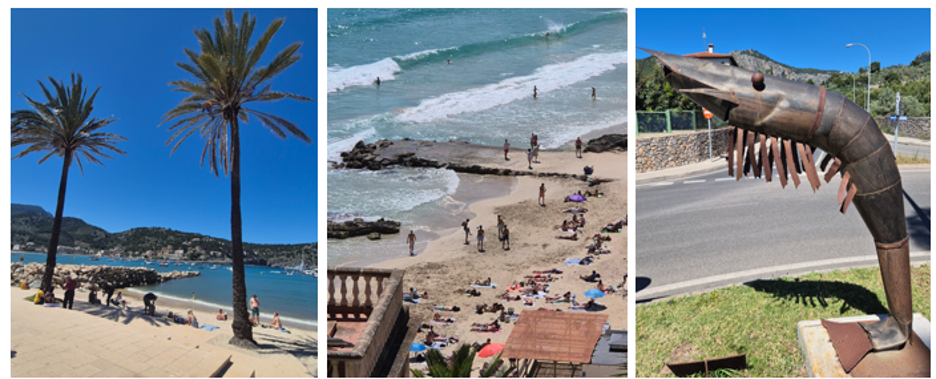
Images from the "Catedral de Mallorca" and the town of Sóller.
Palma’s combination of history, art, gastronomy, and natural beauty makes it one of the most attractive cultural destinations in the Mediterranean.